Catalogue · Quote on request · Phone 011 345 8800 · sales@toco.co.za
A trusted lifting, lashing and rigging supplier to South Africa and the SADC region. Toco Lifting supplies and ships duplex flat webbing slings to mining, construction and heavy-industry operations across Southern Africa – including Zambia, the DRC, Botswana, Namibia, Mozambique and Zimbabwe.
Duplex flat lifting slings
Toco Lifting has supplied duplex flat webbing slings to riggers, mining contractors and heavy-industry sites across South Africa and the SADC region since 2002. A duplex flat sling is a length of flat woven webbing with a reinforced eye formed at each end. The trade often calls these nylon flat slings, and that is the term most buyers search for; the accurate material description is polyester webbing – Toco’s slings are woven from polyester, which has low stretch under load and good resistance to most acids. Toco Lifting is approved by the Department of Labour under LME No. 008 to test and certify webbing lifting slings, which fall within Toco’s lifting tackle scope. Every duplex flat sling is supplied with a Conformance Inspection Certificate.
What makes a duplex flat sling
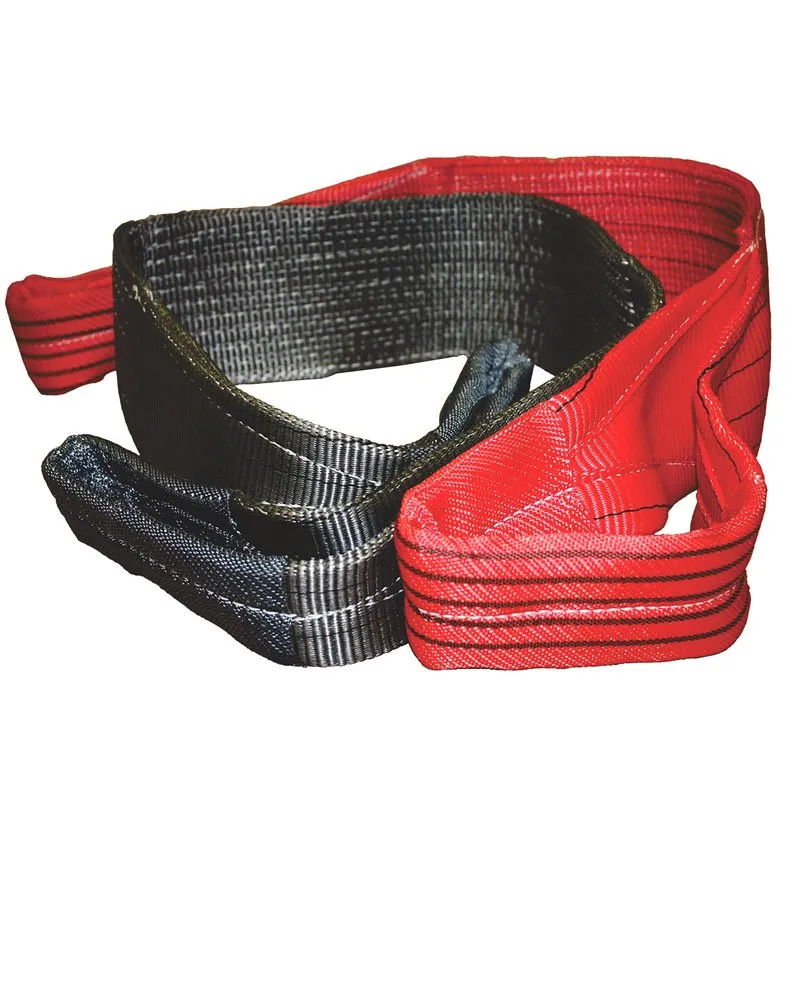
The defining feature of a duplex flat sling is its flat, wide woven body. That flat face is what sets it apart from a round sling:
- Wide bearing surface – the flat body lays a broad band of webbing against the load, spreading the contact and reducing point loading on the item being lifted.
- Reinforced eyes – an eye at each end takes the hook or shackle. The eyes are the wear and connection points and are reinforced for that duty.
- Duplex construction – a two-ply webbing build for the rated duty.
- Easy to read on site – the flat face carries the rating tag and the colour clearly, so the sling’s capacity is visible at a glance.
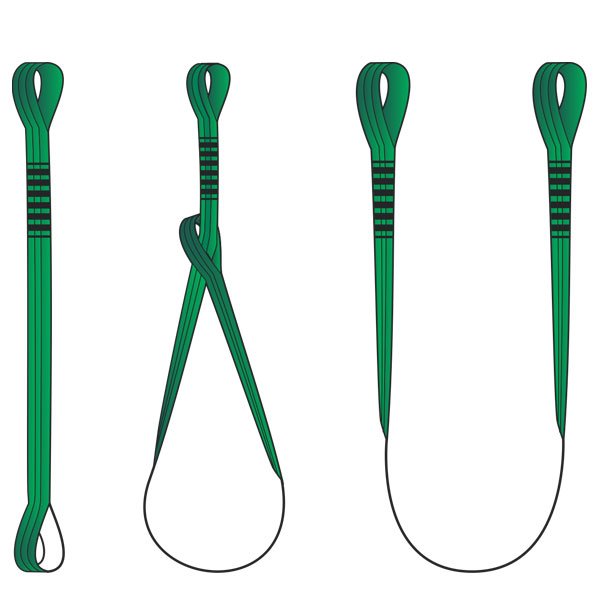
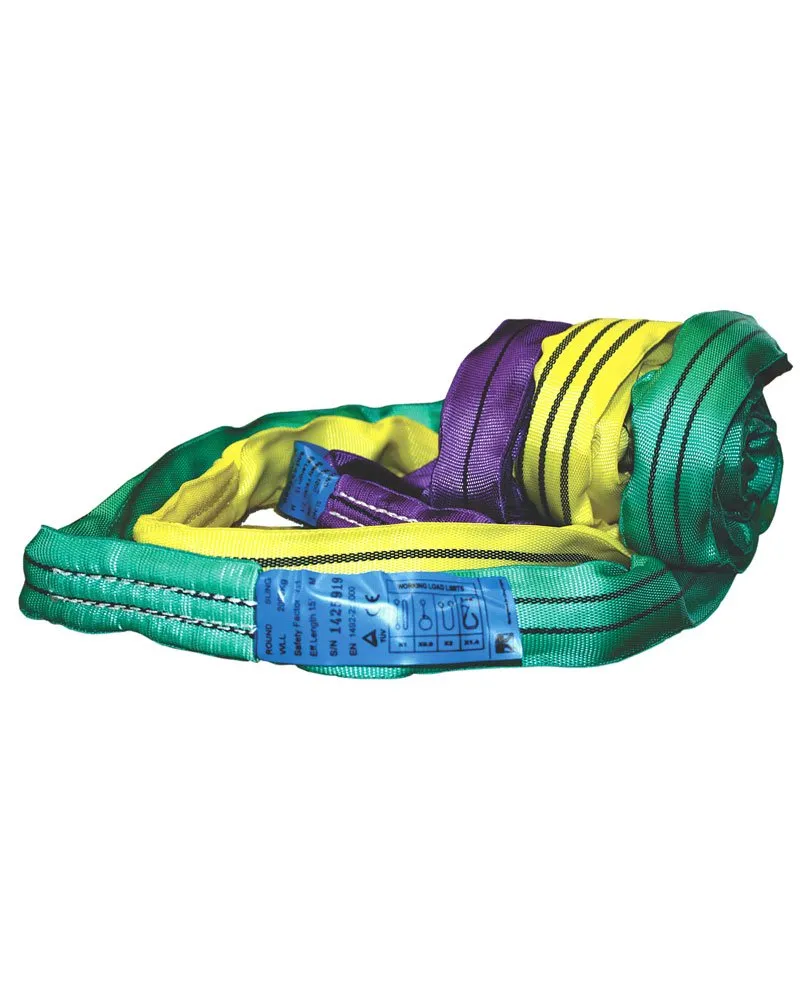
The flat form suits straight vertical lifts, choker hitches and basket hitches where a broad, stable bearing surface against the load is wanted. Where a sling needs to wrap closely around an awkward load, or where the wear point needs to be rotated, an endless round sling is the better choice.
Working Load Limits and colour code
Duplex flat slings follow the standard webbing colour code: each Working Load Limit has its own webbing colour and width.
| Webbing width |
Colour |
Working Load Limit |
| 50 mm |
Violet |
1 ton |
| 60 mm |
Green |
2 ton |
| 90 mm |
Yellow |
3 ton |
| 120 mm |
Grey |
4 ton |
| 150 mm |
Red |
5 ton |
| 180 mm |
Brown |
6 ton |
| 240 mm |
Blue |
8 ton |
| 300 mm |
Orange |
10 ton |
Working Load Limit is the vertical rated capacity of the sling. Higher capacities – 12, 15, 20, 25, 30, 40, 50 and 80 ton – are woven in orange and supplied to order. The rated capacity changes with the hitch and the sling angle: a choker hitch and wider sling angles reduce the effective capacity. Always size to the actual hitch and angle in service. Toco’s duplex flat slings are assembled to SANS 94-1.
Where duplex flat slings are used
- Construction – structural lifts and site material handling where a wide bearing surface protects the load.
- Mining – equipment and plant lifts where a light, easily handled sling is needed.
- Daily preventative maintenance – routine machinery lifts where a soft flat sling guards finished and painted surfaces.
Duplex flat slings suit many other heavy industrial lifting applications – contact Toco Lifting to confirm the right sling for your work.
Request a quote from Toco Lifting
From Toco Lifting – South Africa’s premier lifting, lashing and rigging equipment supplier. Tell us the Working Load Limit, length, eye type and quantity for a same-day quote.
Phone: 011 345 8800 · Email: sales@toco.co.za · Germiston (head office) · Cape Town · supplying the SADC region
Related: Nylon & Polyester Lifting Slings · Endless Round Slings · Steel Wire Rope · Certifications
Frequently asked questions
What is a duplex flat sling?
A duplex flat sling is a lifting sling made from flat woven polyester webbing with a reinforced eye at each end. Its flat, wide body gives a broad bearing surface against the load, which spreads the contact and suits straight vertical, choker and basket lifts. It is one of the two main forms of webbing sling, the other being the endless round sling.
Is a duplex flat sling a nylon sling?
Duplex flat slings are widely called nylon flat slings in the trade, and that is the term most buyers search for. The accurate material description is polyester webbing: Toco’s flat slings are woven from polyester, which has low stretch under load, good resistance to most acids and low water absorption. Polyester is the standard material for modern webbing slings.
When should I use a flat sling instead of a round sling?
Use a duplex flat sling when you want a wide, stable bearing surface against the load – for straight vertical lifts, choker hitches and basket hitches on regular loads. Choose an endless round sling instead when the sling must wrap closely around an awkward load, or when you want to rotate the loop to move the wear point.
What capacity of duplex flat sling can Toco supply?
Toco supplies duplex flat slings from 1 ton through 10 ton Working Load Limit as a standard range, in the colour-coded widths from 50 mm to 300 mm. Higher capacities of 12, 15, 20, 25, 30, 40, 50 and 80 ton are supplied to order. Tell Toco the load, the hitch type and the sling angle, and Toco will confirm the correct sling.
Are Toco duplex flat slings tested and certified?
Yes. Toco is approved by the Department of Labour to test and certify webbing lifting slings, and every duplex flat sling is supplied with a Conformance Inspection Certificate. Toco’s duplex flat slings are assembled to SANS 94-1. Slings in service must be inspected before each use and removed from service when worn, cut or damaged.
How do I inspect a flat webbing sling?
Inspect the full length of the webbing and both eyes for cuts, abrasion, fraying, broken stitching, heat or friction damage, chemical attack and a missing or unreadable rating tag. Reject the sling if any damage limit is reached. A sling must be inspected before each use, and for sustained service periodic written inspections by a competent person are required under South African OHS regulations.