Need a beam clamp for a specific capacity or beam profile? Call 011 345 8800 or email sales@toco.co.za.
Toco Lifting is approved by the Department of Labour to undertake Conformance Inspections and Performance Testing (Load Testing) per approved SABS, SANS, or relevant OEM Standard. Toco has supplied lifting, lashing and rigging equipment since 2002, operating from a Germiston head office and a Cape Town branch. A beam clamp is lifting tackle; it is supplied as conforming product and certified on enquiry.
What is a beam clamp and what is it used for?
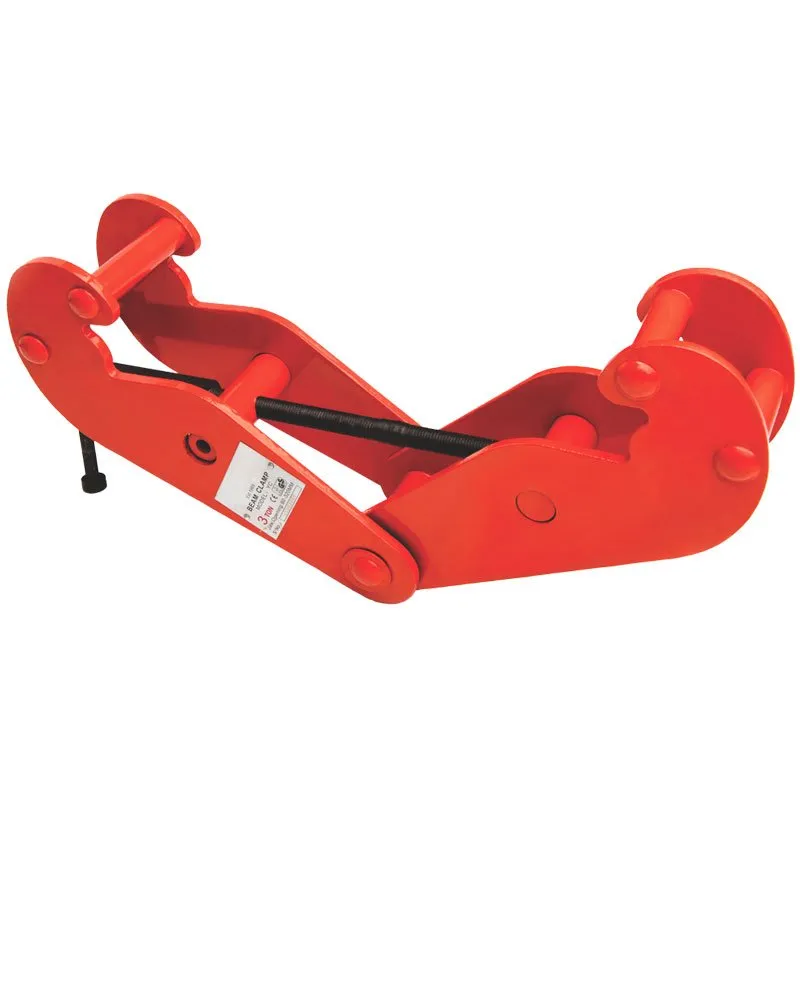
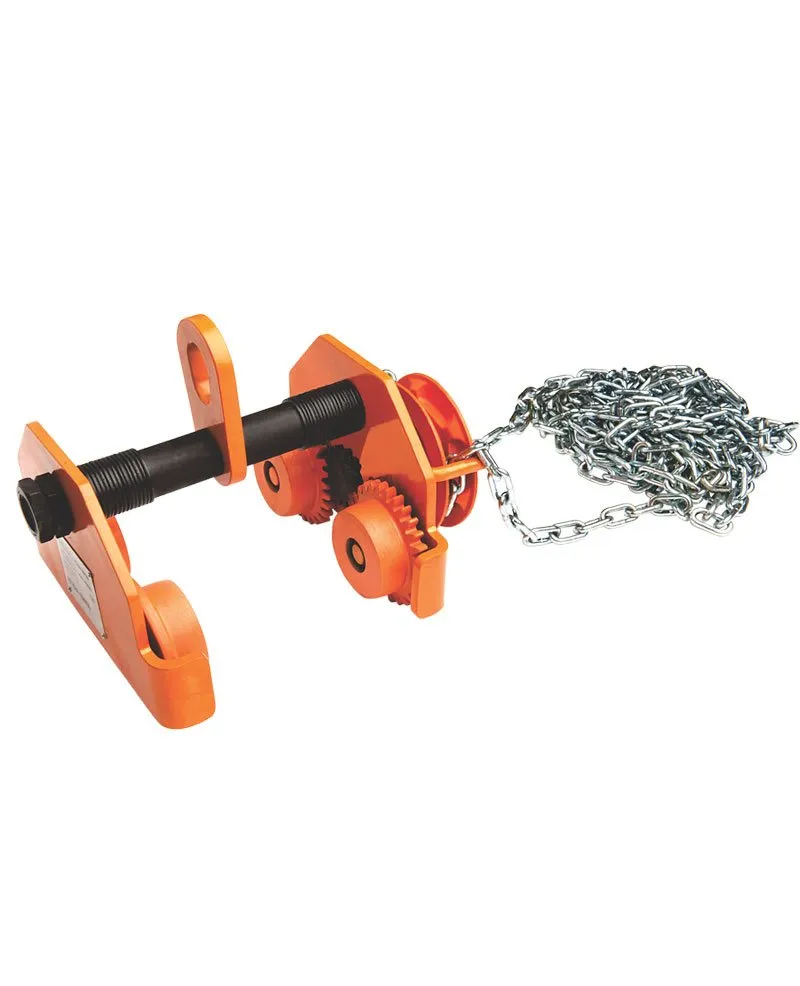
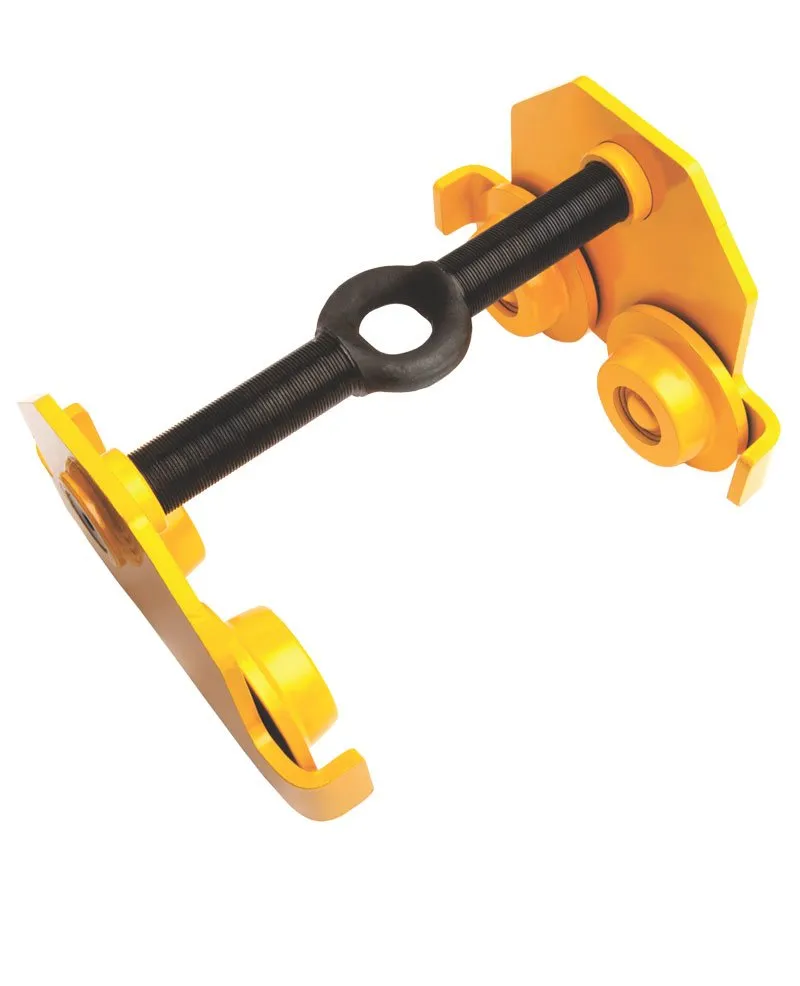
A beam clamp is a fixed lifting point that clamps onto a steel beam or girder so a chain block, lever hoist or other lifting device can be hung from it. It gives a temporary overhead anchor where there is no built-in lifting point, and is widely used for plant maintenance, equipment installation, structural work and one-off lifts on site.
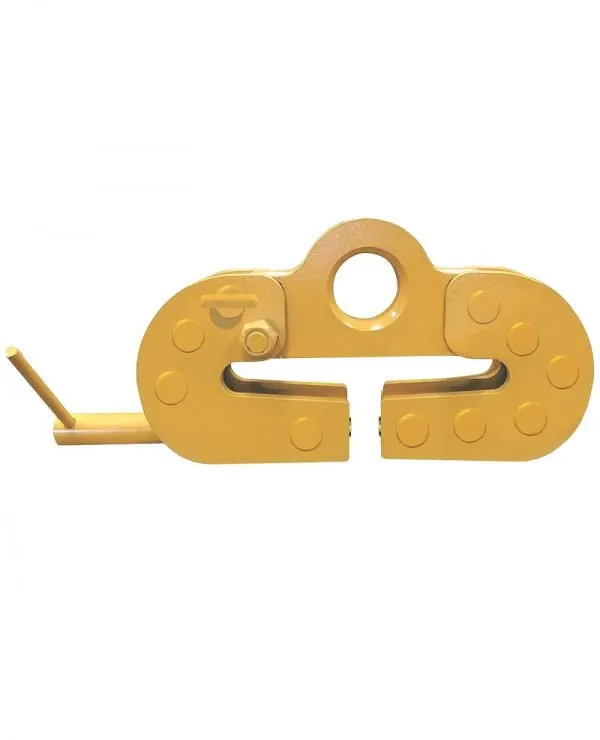
A beam clamp is designed for vertical (straight) lifts only. It is not designed for angled, side or swinging loads. For lifts where the load needs to move at an angle off the vertical, a beam manipulator (side-loadable beam clamp) is the correct attachment.
What is the difference between eye-type and pin-type beam clamps?
Toco stocks beam clamps in two configurations:
- Eye-type beam clamps – the lifting attachment is a fixed eye on top of the clamp body. A chain block or lever hoist hooks directly into the eye. Quick to fit and the most common choice.
- Pin-type beam clamps – the lifting attachment is a pin through the clamp body, allowing the hoist to be shackled in. Typically used where a shackle or specific hook arrangement is required.
Both configurations clamp onto the beam in the same way, and both are supplied across the standard capacity range. Toco confirms the correct configuration for the application on enquiry.
What capacity beam clamps does Toco supply?
Toco’s standard beam clamp range covers 1 ton to 10 ton in both eye-type and pin-type configurations. Beam clamps with a 20 ton capacity are available on request.
The rated capacity of the beam clamp must match or exceed the load being lifted, and the beam itself must be checked to ensure it can support the load. Speak to Toco to specify the right beam clamp for the lift and the beam profile.
How is a beam clamp fitted to a beam?
A beam clamp is fitted by adjusting it to the flange width of the beam and tightening it so the clamp jaws grip the underside of the top flange. The clamp must be fitted square to the beam, with the jaws fully seated on the flange, and within the flange-width range it is designed for. The lift then hangs directly below the clamp.
The beam must be checked before lifting: it must be capable of carrying the load, free of damage or deformation at the clamp position, and oriented so the clamp grips a top flange that can take the lift. Toco supplies the applicable fitting information with the product on enquiry.
Are beam clamps tested and certified?
A beam clamp is lifting tackle rather than a lifting machine, so it cannot suspend or halt motion automatically once input energy stops. Where a certificate is required, a beam clamp is supplied with a Conformance Inspection Certificate, and an OEM Certificate can be provided on request for imported stock where a manufacturing trace is needed.
Beam clamps are not within the five equipment categories of Toco’s LME 008 testing scope; LME 008 applies to Toco at the corporate-registration level. Like all lifting tackle, a beam clamp in service should be inspected at regular intervals and kept in good condition. Toco supplies the correct certification with the product on enquiry, and can inspect lifting tackle as part of its testing and certification service.
How do you use a beam clamp safely?
Use a beam clamp only within its rated capacity, and only for vertical (straight) lifts. Check the clamp before each use for damage, wear or distortion and take a damaged clamp out of service. Make sure the clamp is square and fully seated on the beam flange before taking the load. Lift smoothly without snatching, keep people clear of the load while it is suspended, and never use a beam clamp for an angled or side load — if the lift needs to move off the vertical, use a beam manipulator instead.
Which industries use beam clamps?
Beam clamps are used wherever a temporary overhead lifting point is needed on a steel beam. Typical settings include construction, heavy engineering and daily preventative maintenance, among many other heavy industrial applications. Toco does not limit who it supplies; if your site needs a quick-fit lifting point on a beam, Toco can supply the clamp to suit.
Related products and information
Speak to Toco Lifting about beam clamps and overhead lifting points. Call 011 345 8800, email sales@toco.co.za, or request a quote online.
Frequently asked questions
What capacity beam clamps does Toco supply?
Toco’s standard range is 1 ton to 10 ton in eye-type and pin-type configurations. Beam clamps to 20 ton are available on request. The clamp’s rated capacity must match or exceed the load being lifted.
Can a beam clamp be used for an angled lift?
No. A standard beam clamp is designed for vertical (straight) lifts only. For lifts where the load needs to move off the vertical, use a beam manipulator (side-loadable beam clamp), which is designed to handle lifts up to 45 degrees.
Eye-type or pin-type – which beam clamp should I use?
Eye-type clamps are the most common, with a fixed lifting eye that takes the hoist hook directly. Pin-type clamps use a pin through the clamp body, suited to applications where a shackle or a specific hook arrangement is required. Both are available across Toco’s standard capacity range; speak to Toco so the right configuration is supplied for the lift.
What certificate is supplied with a beam clamp?
A beam clamp is supplied with a Conformance Inspection Certificate where a certificate is required, with an OEM Certificate available on request for imported stock that needs a manufacturing trace. Beam clamps are lifting tackle and are not within Toco’s LME 008 testing categories.
How do I know the beam will take the load?
Both the beam clamp and the beam itself need to be checked. The clamp’s rated capacity must match or exceed the load, and the beam must be capable of carrying the load through the clamp position. If you are unsure, get a structural engineer to confirm the beam is suitable before lifting.
Can Toco supply the chain block as well as the beam clamp?
Yes. Toco supplies Vital® chain blocks and lever hoists alongside beam clamps, so a complete overhead lifting set-up can be specified from a single supplier. Toco also tests and certifies chain blocks and lever hoists in-house under its LME 008 registration.